How to choose wall art for your living room
By Amber Nadal · Updated 2026-05-28
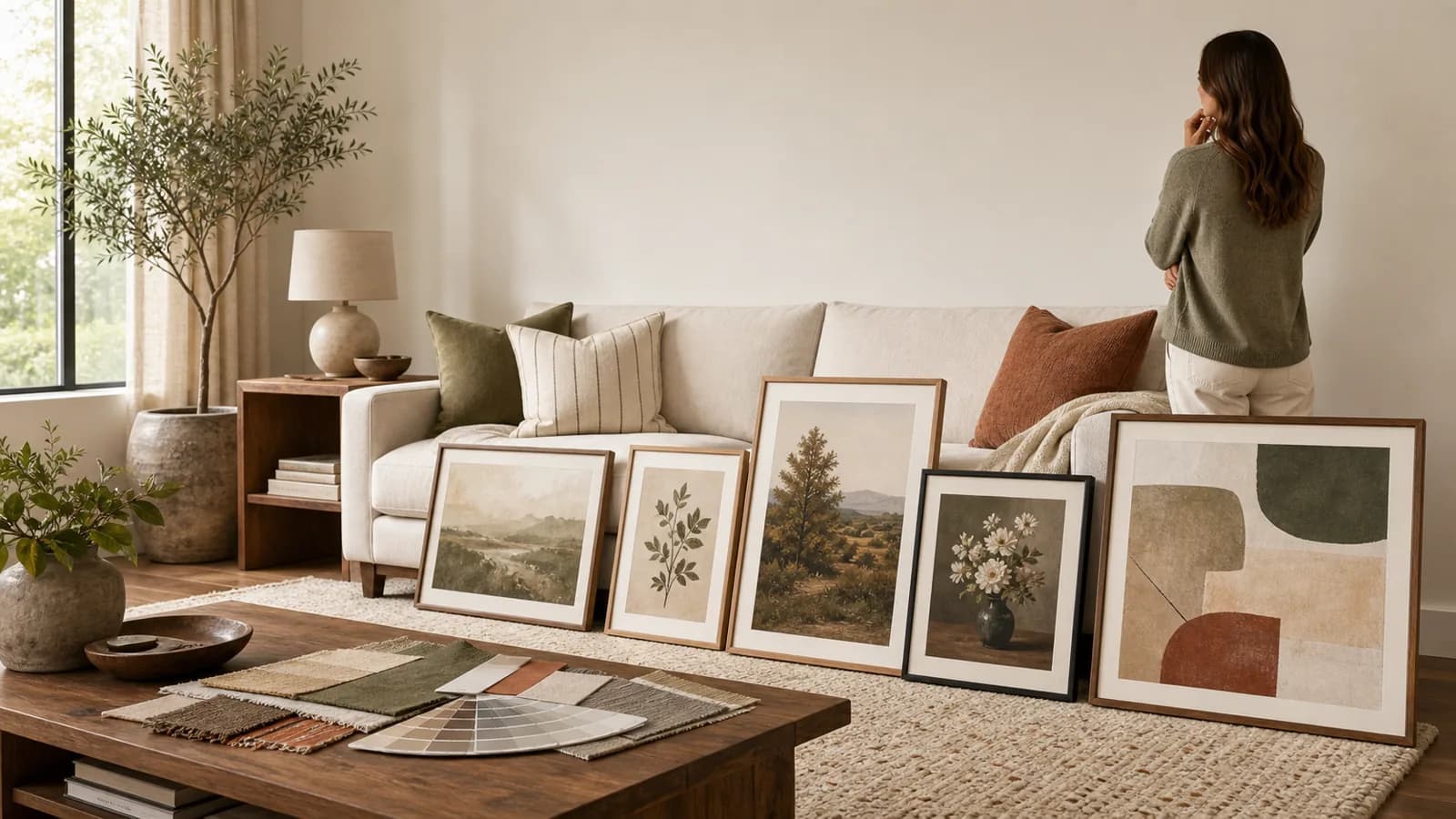
The living room is where art does its most important work. It is the room where people spend the most unstructured time and where guests form a first impression of how you live. Choosing the right piece comes down to four decisions: size, color, style, and placement.
Start with size
Size is the variable most people get wrong. Above a sofa, aim for artwork that spans 60 to 75 percent of the sofa's width and leave 6 to 8 inches between the top of the couch and the bottom of the frame. For a large empty wall, a single piece 48 to 60 inches wide reads as a statement without overwhelming the room.
Match your color palette
Pick three colors already present in your room and make sure the artwork contains at least two of them. This creates harmony without looking overly matched. If your room is neutral, art is the easiest place to introduce a controlled accent color.
Pick a style that fits the room
- Abstract and color-led pieces add energy and work well over a sofa as a focal point.
- Landscape and nature-inspired art brings calm and suits rooms that already feel busy.
- Minimalist and modern art keeps contemporary rooms clean and uncluttered.
Get placement right
Hang the visual center around 57 to 60 inches from the floor. Vertical formats draw the eye up and make ceilings feel taller, which is useful on narrow walls between windows. For a gallery arrangement, keep the outer edges aligned and the gaps consistent at 2 to 3 inches.
Make it personal
A marketplace asks you to pick the closest match to what already exists. With curateddd you describe the living room you are decorating and build artwork around your palette, scale, and mood, then refine it in conversation until it fits.
Work with the room's light
Lighting changes how every color reads. A north-facing living room receives cool, even light that mutes warm tones, so terracotta, mustard, and warm neutrals help balance it. A bright south-facing room can wash out pale, low-contrast art, so pieces with deeper saturation or stronger contrast hold up better. If a wall sits in shadow most of the day, lighter artwork or a piece with a luminous focal point keeps the corner from feeling heavy.
Balance the visual weight of your furniture
Art should answer the furniture beneath and around it. A large, low-slung sectional can carry a single bold, oversized piece, while a delicate console or a pair of slim chairs is better matched with lighter, airier compositions. Think in terms of visual weight rather than literal size: a dark, dense image feels heavier than a pale, open one of the same dimensions, so balance the two sides of the room until neither tips the space off-center.
Layer texture and medium
A living room feels collected rather than catalog-ordered when the art introduces a texture the room does not already have.
- Canvas adds softness and depth and reads as more original than a flat poster.
- Framed prints behind glass feel crisp and formal and suit modern or gallery-style rooms.
- Pairing one larger canvas with smaller framed pieces gives a gallery wall contrast and rhythm.
Decide where to invest
Most living rooms have one wall that does the heavy lifting — usually behind or across from the sofa. Put your largest, most considered piece there, and treat secondary walls as a supporting cast with smaller or quieter art. Spending on the focal wall and economizing elsewhere keeps the room from feeling either bare or busy.
Frequently asked questions
What kind of art is best for a living room?
There is no single right genre, but the most forgiving choices echo colors already in the room and match its energy — calm landscapes for busy spaces, bold abstracts as a focal point in quieter ones.
Should living room art match the rest of the house?
It should feel related, not identical. Carrying a palette, a frame finish, or a recurring subject between rooms creates flow without making every space look the same.
How many pieces of art should a living room have?
One confident focal piece is often enough for a small room. Larger rooms can support a focal wall plus one or two secondary moments, as long as you leave some walls intentionally empty so the eye can rest.
Want art built around your living room? Describe your space to get started.