How to hang wall art: height and spacing
By Allison Jennings · Updated 2026-05-28
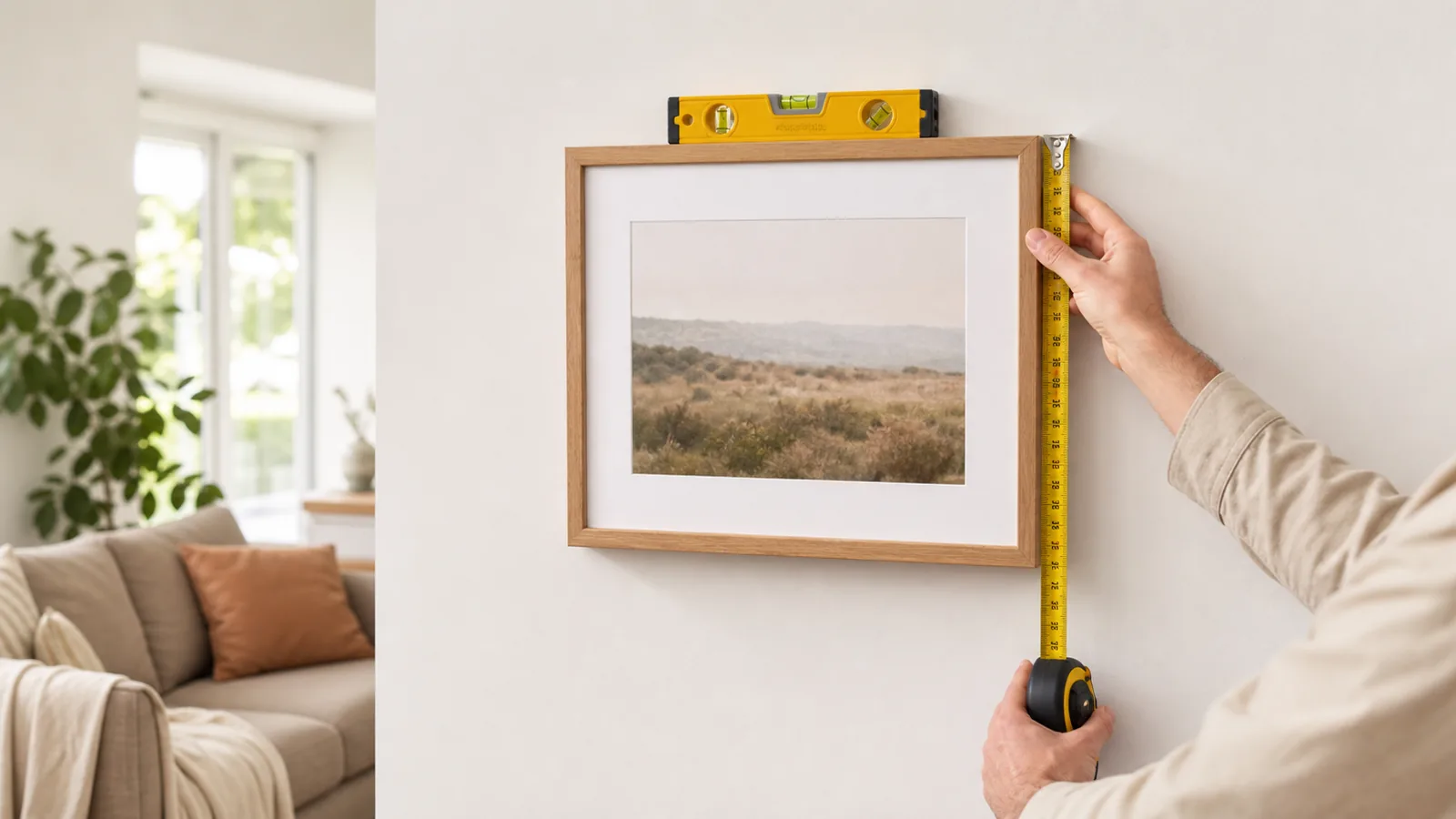
Even the right piece looks wrong when it is hung too high, too low, or crooked. A few simple measurements solve almost every hanging question.
The 57-inch rule
Hang art so its visual center sits about 57 to 60 inches from the floor. That is roughly average eye level and the standard most galleries use. It keeps art from drifting up toward the ceiling, which is the most common height mistake.
Above furniture
When art hangs above a sofa, bed, or console, the center rule takes a back seat to the relationship with the furniture. Leave about 6 to 10 inches between the top of the furniture and the bottom of the frame so the two read as a group rather than floating apart.
Spacing for sets
For a pair or a gallery wall, keep the gaps consistent — 2 to 3 inches between pieces in open rooms, slightly tighter in narrow spaces. Consistent spacing is what makes several frames read as a single, intentional arrangement.
Hardware tips
- Use a level — a slightly crooked frame is more noticeable than you think.
- Picture-hanging strips work for lighter pieces; use wall anchors rated for about twice the artwork's weight for heavier ones.
- Tape paper templates to the wall first to test placement before making any holes.
What you'll need
- A tape measure and a pencil for marking.
- A spirit level, or a level app on your phone.
- Picture hooks, wall anchors, or hanging strips rated for the weight of your piece.
- A stud finder if you are hanging anything heavy.
Hang a single piece, step by step
- Decide the center height — about 57 to 60 inches from the floor for the visual center of the piece.
- Measure the height of the artwork and divide by two to find the distance from its center to its top edge.
- Measure how far the hanging wire or bracket sits below the top edge when pulled taut.
- Add those measurements to your center height to find exactly where the hook goes, then mark it.
- Fix the hook or anchor, hang the piece, and check it with a level before stepping back.
Match the hardware to your wall
The right fixing depends on both the wall and the weight of the art. Getting this wrong is the most common reason pieces sag, lean, or fall.
- Drywall: screw into a stud where possible, or use a rated drywall anchor for heavier pieces.
- Plaster: drill a small pilot hole to avoid cracking, and use an anchor sized to the weight.
- Brick or concrete: use a masonry bit and wall plugs rated well above the artwork's weight.
- Light pieces on smooth walls: adhesive hanging strips avoid holes and are easy to reposition.
Keep it straight and keep it up
Two small adjustments solve most problems. A pair of clear rubber bumpers on the bottom corners stops a frame from drifting crooked and protects the wall, and using two hooks spaced apart instead of one keeps a wide piece level far better than a single center hook. For anything heavy, choose hardware rated for roughly twice the artwork's weight so the fixing is never working at its limit.
Frequently asked questions
How high should I hang wall art?
Hang the visual center about 57 to 60 inches from the floor — gallery standard and roughly average eye level. Above furniture, prioritize a 6 to 10 inch gap above the furniture over the strict center rule.
How do I hang art without nails?
Adhesive picture-hanging strips hold most lightweight framed pieces and canvases without holes, as long as you stay within their weight rating and press them onto a clean, dry wall.
Should art be centered on the wall or the furniture?
Center it on the furniture below it, not the wall. Art that is centered on the wall but off-center over a sofa or bed tends to look like a mistake.
Need a piece sized for the wall first? Design custom art with curateddd.